
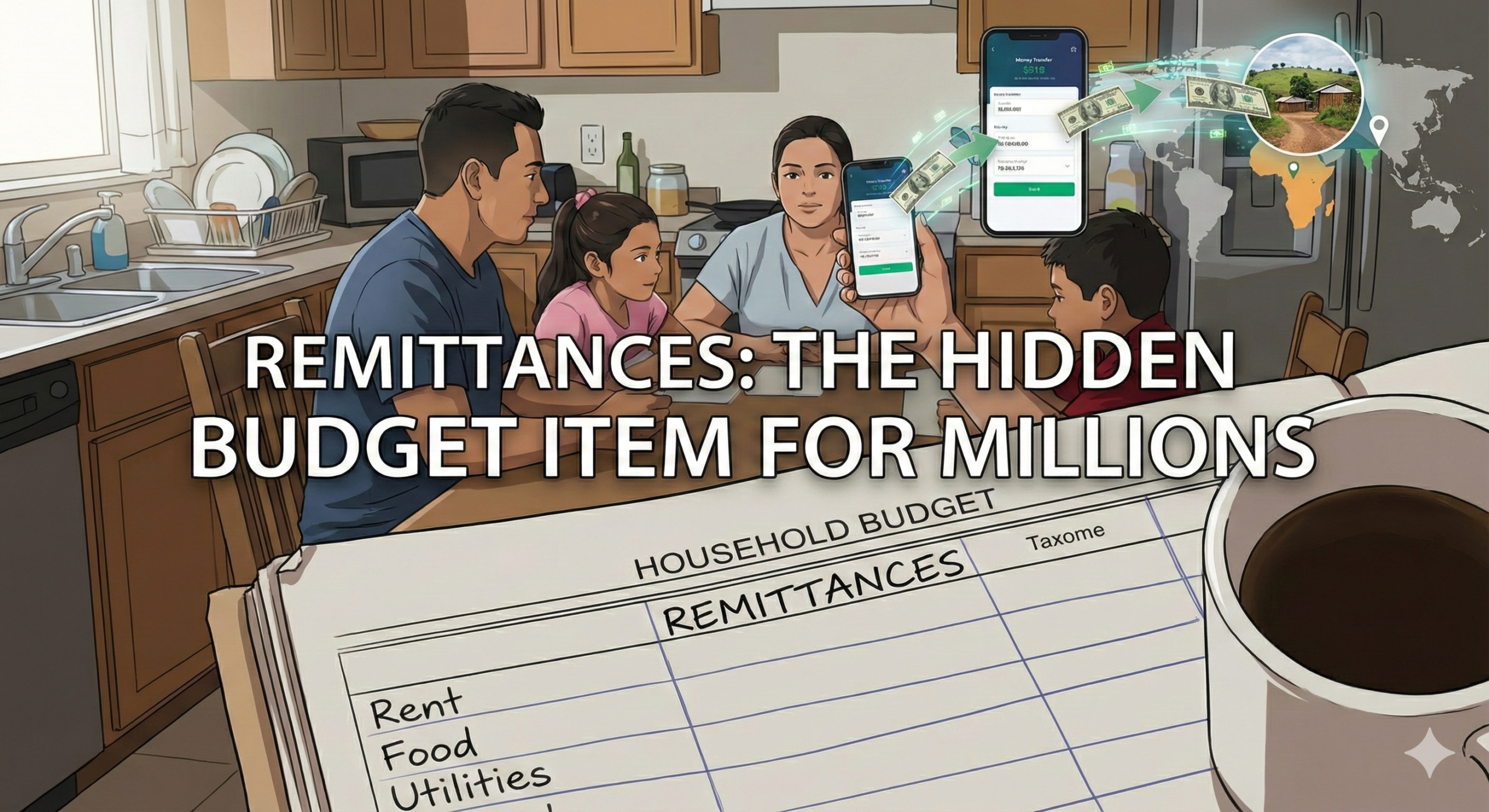
Introduction: The Saturday Morning Queue
The rain in Queens, New York, was not the cleansing kind; it was a cold, gray drizzle that seeped into the bones of the city, dampening the spirits of the early morning commuters on Roosevelt Avenue. Inside the cramped bodega, sandwiched between a discount electronics store and a bakery smelling of warm pan dulce, the air was thick with the scent of wet wool, stale coffee, and the metallic tang of anxiety. Elena stood near the back of the line, her fingers tightly clutching a red envelope containing $300 in cash—tips she had painstakingly accumulated over six days of cleaning office buildings in Manhattan.
She checked her watch: 10:45 AM. If she didn’t reach the counter in fifteen minutes, she would be late for her second shift at the laundromat, a tardiness that could cost her the hours she desperately needed. Ahead of her, the line moved with agonizing slowness. A man in a heavy construction jacket argued in hushed, desperate tones with the agent behind the plexiglass. “But last week the rate was eighteen,” he pleaded, his Spanish clipped with frustration and fatigue. The agent, a woman who had seen this scene play out a thousand times, simply shrugged, pointing a pen at the flickering LED board above her head. Today: 17.20.
Elena felt a knot tighten in her stomach, a familiar physical manifestation of financial stress. She did the mental math instantly, a calculation she had performed every week for five years. The drop in the exchange rate meant her mother in Puebla, Mexico, would receive fewer pesos than planned. It meant the money intended for her younger brother’s tuition might not stretch to cover his textbooks for the semester. It meant Elena might have to skip lunch next week to make up the difference, trading her own sustenance for her family’s stability.
She wasn’t buying a luxury item. She wasn’t investing in high-yield stocks or saving for a vacation. She was paying what millions of migrants silently refer to as “The Bill that Never Ends.” When Elena finally reached the counter, she handed over her cash with a mixture of relief and resignation. The transaction fee was $12. The exchange rate markup—invisible to the untrained eye but painfully real to her limited budget—shaved off another $8 in value. She walked out into the rain, $300 poorer in currency but rich in fulfilled obligation, holding a receipt that represented love, duty, and a financial hemorrhage that no standard budgeting app ever accounts for.
Elena is not an anomaly; she is a statistic in one of the world’s largest and least understood economies. She is one of approximately 200 million migrant workers globally who send money home regularly, participating in a financial ritual that sustains entire nations while draining the individuals who fund it.1 While personal finance blogs in the Global North extol the virtues of the “50/30/20 rule” (50% needs, 30% wants, 20% savings), they almost universally ignore the financial reality of the diaspora. For the migrant, the budget often looks more like 40% survival, 40% remittance, and 20% prayer.
This report explores the colossal, often invisible economy of remittances. It investigates the hidden costs that erode the wealth of the world’s most vulnerable populations, compares the giants of the industry like Western Union against the digital upstarts like Wise, and offers a comprehensive guide for the millions who treat sending money home not as a choice, but as a lifeline.
Chapter 1: The Invisible Economy – The Scale of Global Remittances
1.1 The River of Gold
To understand the weight of Elena’s $300, one must first view the aggregate flow of such transactions. Remittances are not merely pocket money; they are a macroeconomic force that rivals the GDP of mid-sized nations and serves as a critical stabilizer for the global economy. They represent a river of gold flowing upstream, from the individual laborers of the developed world to the households of the developing world, defying the gravitational pull of traditional capital flows which typically move from wealthy investors to profitable markets.
According to projections from the World Bank, remittance flows to Low- and Middle-Income Countries (LMICs) were expected to maintain a robust growth trajectory, expanding by 2.3% in 2024 and 2.8% in 2025, eventually reaching a staggering $690 billion.2 When high-income countries are included in this calculation, the total global flow is estimated to have exceeded $905 billion in 2024, a figure that underscores the sheer magnitude of this peer-to-peer economic engine.3
This capital injection is remarkably resilient, often described by economists as “counter-cyclical.” Unlike Foreign Direct Investment (FDI), which is skittish and flees at the first sign of political instability or economic downturn, or Official Development Assistance (ODA), which is subject to the political whims of donor nations, remittances are driven by familial duty. When a crisis hits a home country—be it a hurricane in the Caribbean, conflict in Ukraine, or an economic collapse in Sri Lanka—migrants do not pull back; they send more. They cut their own consumption in host countries to cushion the blow for their relatives back home.1
In 2024, remittance flows to LMICs were expected to reach $685 billion, a figure larger than FDI and ODA combined.3 This effectively means that the tireless labor of migrants like Elena constitutes the largest foreign aid program in human history, funded not by tax dollars or government mandates, but by the sweat equity, sacrifice, and solidarity of the global working class.
1.2 The Demographic Engine
The drivers of this volume are structural, deep-seated, and unlikely to abate in the near future. The World Bank identifies three primary engines that will sustain this growth for decades to come, ensuring that remittances remain a permanent fixture of the global economic landscape rather than a temporary phenomenon.
First, Widening Income Disparities continue to serve as the primary push factor. The economic gap between developed and developing nations incentivizes labor migration, as workers seek to arbitrage their labor—earning in strong currencies like the Dollar, Pound, or Euro, and spending (via remittances) in weaker local currencies.2
Second, Demographic Pressures are reshaping the global labor market. High-income nations in the West and parts of East Asia are grappling with aging populations and shrinking workforces, creating a structural demand for imported labor in care, service, and construction sectors. Conversely, “youth bulges” in Africa and South Asia are creating a surplus of young workers entering labor markets that cannot absorb them, driving them to seek opportunities abroad.2
Third, Climate Change and shifting global weather patterns are increasingly acting as a catalyst for migration. As agricultural livelihoods in the Global South become untenable due to drought, flooding, or unpredictable seasons, families are diversifying their income streams by sending a member abroad. This “migration as adaptation” strategy is expected to drive an increase in the number of individuals migrating in search of economic opportunities, further fueling remittance flows.2
1.3 The “Hidden” Budget Item
For the average household in the United States, United Kingdom, or the Eurozone, a monthly budget consists of standard categories: rent, utilities, food, transportation, and perhaps a savings contribution. For the migrant household, however, “Remittances” is often the second-largest line item after rent, yet it is conspicuously absent from standard financial advice and budgeting tools.
Data indicates that migrant workers typically send between $200 and $300 home every one or two months.1 While this might seem like a modest sum to a high-income earner, it represents roughly 15% of the migrant’s total earnings.6 However, this percentage is deceptive. When calculated against disposable income—money left over after paying for survival needs in high-cost cities like London, New York, or Dubai—the remittance often consumes the entirety of what would otherwise be savings.
This expenditure is rarely optional. It is governed by a social contract known as the “implicit family loan.” The migrant is often funded by the family to leave—plane tickets purchased, visas paid for, smugglers hired—with the explicit or implicit understanding that the investment will yield returns in the form of monthly transfers. Failure to remit is not just a financial lapse; it is a breach of family honor, leading to immense psychological stress, social ostracization, and a profound sense of failure.7
Chapter 2: The Price of Generosity – Anatomy of a Fee
2.1 The 6.35% Tax on the Poor
If remittances are a lifeline, the fees charged to send them are a blockage in the pipe, a toll booth erected on the road to survival. The global average cost of sending $200 remains stubbornly high, defying the deflationary trends seen in other technological sectors. In the first quarter of 2024, the global average cost was recorded at 6.35%.9 This means that for every $200 sent, roughly $12.70 is lost to the intermediary.
While this figure has declined from nearly 10% in 2009, it remains more than double the Sustainable Development Goal (SDG) target of 3%.3 The disparity is even more grotesque in specific corridors. Sub-Saharan Africa remains the most expensive region to send money to, often exceeding 8% per transaction, effectively taxing the world’s poorest populations at the highest rates.10
Why does it cost so much to move digital numbers from one ledger to another? The answer lies in the opacity of the industry and the “dual-layer” pricing structure that confuses even savvy consumers, allowing providers to extract maximum value from those who can least afford it.
2.2 The Two-Headed Monster: Upfront Fees vs. FX Markups
Remittance providers, from traditional banks to Money Transfer Operators (MTOs) like Western Union and MoneyGram, generate revenue through two distinct mechanisms. Understanding this distinction is the single most important step for any migrant trying to optimize their budget and ensure more of their hard-earned money reaches their family.
1. The Upfront Transfer Fee:
This is the advertised cost, the visible tip of the iceberg. It is the $5 or $10 fee explicitly stated at the counter or displayed on the app screen before the transaction begins. Providers often compete aggressively on this number, sometimes lowering it to $0 to attract customers. However, a $0 upfront fee is rarely “free.” It is often a marketing hook designed to distract from the second, more lucrative revenue stream.11
2. The Exchange Rate Markup (The Hidden Cost):
This is where the profit—and the consumer loss—truly lies. The “Mid-Market Rate” (or Interbank Rate) is the “real” exchange rate, the midpoint between the buy and sell prices of two currencies in global markets. It is the rate one sees on Google, Reuters, or Bloomberg.13
However, remittance providers rarely give customers the mid-market rate. Instead, they offer a “Retail Rate,” which includes a markup.
- Example: If the Mid-Market rate is 1 USD = 20 Mexican Pesos (MXN).
- Provider Offer: The provider may offer the customer a rate of 1 USD = 19 MXN.
- The Math: On a $1,000 transfer, the recipient gets 19,000 MXN instead of 20,000 MXN. The 1,000 MXN difference (roughly $50 USD) is kept by the provider as pure profit.
This markup is often undisclosed or buried in the fine print of the user agreement. As noted in research on “junk fees,” providers can advertise “Zero Fees” while effectively charging a 3% to 5% spread on the currency exchange, a practice that costs Americans alone billions of dollars annually.12
The table below illustrates how a seemingly cheaper provider can actually be more expensive due to these hidden markups.
| Component | Provider A (“Zero Fee”) | Provider B (Transparent Fee) |
| Amount Sent | $1,000 | $1,000 |
| Upfront Fee | $0.00 | $6.42 |
| Exchange Rate | 1 USD = 19.00 MXN (Markup) | 1 USD = 20.00 MXN (Mid-Market) |
| Calculation | $1,000 * 19.00 | ($1,000 – $6.42) * 20.00 |
| Recipient Gets | 19,000 MXN | 19,871 MXN |
| Value Lost | $50.00 (via Exchange Rate) | $6.42 (via Upfront Fee) |
In this scenario, the “Zero Fee” option actually costs the user roughly $43 more than the fee-charging option.
2.3 The “Drip Pricing” Deception
A pervasive tactic in the industry is “drip pricing.” A sender begins a transaction seeing a low fee or a promotional rate. As they proceed through the steps—entering recipient details, selecting a payment method—additional costs appear. Using a credit card might incur a “cash advance” fee from the issuer. Selecting “instant delivery” adds a premium. By the time the “Submit” button is pressed, the cost has ballooned, but the user, committed to the process and cognitively fatigued, accepts it out of urgency.15
For millions of migrants, this pricing structure makes accurate budgeting nearly impossible. A worker might set aside $200 to send home, only to find that the rate has shifted or a fee has increased, forcing them to dip into their grocery money to ensure the full amount reaches their family. This unpredictability adds a layer of stress to an already financially precarious existence.
Chapter 3: The Industry Battlefield – Old Guard vs. The Disruptors
The remittance market is currently a battlefield between legacy giants who built their empires on physical networks and digital challengers who are rewriting the rules with software. For the consumer, choosing a side is the difference between losing 7% of their money or losing 1%, a margin that can determine whether a child stays in school or a medical bill gets paid.
3.1 The Incumbent: Western Union (The Cash King)
Western Union (WU) is a colossus of the industry. With roots dating back to the telegraph era of 1851, it commands a network of over 500,000 agent locations worldwide, a physical footprint that rivals the largest retail chains.17
The Model: WU operates primarily on a cash-to-cash model. A sender walks into an agent (often a grocery store, pharmacy, or check-cashing outlet), hands over cash, and receives a Money Transfer Control Number (MTCN). The recipient, perhaps in a rural village in the Philippines or a small town in El Salvador, takes this number to a local shop and collects cash.
The Pros:
- Reach: For unbanked recipients in remote areas, WU is often the only option. If a village lacks internet, smartphones, or ATMs, digital wallets are useless. Cash is king, and WU is the king of cash.18
- Trust: The brand is ubiquitous. For older generations of migrants, the yellow and black sign provides a sense of security that an app cannot match. The physical receipt is tangible proof of the transaction.
The Cons:
- Cost: WU is historically expensive. Their fees vary wildly based on the “corridor,” payment method, and speed. Their exchange rate markups are typically higher than digital-first competitors, often serving as the primary source of revenue.11
- Inconvenience: The “standing in line” experience is a significant time tax. Migrants often sacrifice lunch breaks or rest hours to physically travel to an agent, wait in queues, and fill out paper forms.20
3.2 The Disruptor: Wise (The Transparency Radical)
Wise (formerly TransferWise) launched with a specific mission to eliminate hidden exchange rate markups and bring transparency to cross-border payments.
The Model: Wise operates entirely online and uses a peer-to-peer netting mechanism. It connects local bank accounts in different countries. When a user sends money from the US to the UK, the money technically never crosses borders. Wise takes USD into its US account and pays GBP out of its UK account from funds it already holds there.
The Pros:
- Mid-Market Rate: Wise charges a transparent upfront fee (usually a percentage) but gives the customer the exact mid-market exchange rate. There is no hidden markup, ensuring the user knows exactly what they are paying.13
- Price: In almost every head-to-head comparison for bank-to-bank transfers, Wise comes out cheaper than traditional banks and WU, often saving users significant amounts on larger transfers.11
The Cons:
- Bank Dependence: Wise generally requires the sender and receiver to have bank accounts or digital wallets. It is less effective for sending cash to a grandmother in a rural village who has no smartphone or bank access, limiting its reach in the most underdeveloped regions.18
3.3 The Middle Ground: Remitly and WorldRemit
Companies like Remitly and WorldRemit sit between these two extremes. They are digital-first (apps) but specialize in remittances to developing nations, offering cash pickup options and mobile wallet integrations that Wise sometimes lacks.
The Model: They often use a “promotional rate” for new customers to hook them in. Their business model relies on a mix of fees and exchange rate markups, though usually lower than WU.23
The Pros:
- Speed: Remitly offers an “Express” option that is near-instant (for a higher fee), catering to the emergency nature of many remittance transactions.25
- Integration: They connect seamlessly with mobile wallets like GCash and M-Pesa, bridging the digital sender with the cash-dependent receiver.
3.4 Head-to-Head Comparison: Sending $1,000 (USA to Mexico/India/Eurozone)
The following table synthesizes data from 2024/2025 cost comparisons to illustrate the stark difference in value proposition between these providers.11
| Feature | Wise | Western Union | Remitly |
| Exchange Rate | Mid-Market Rate (Real Rate) | Rate + Markup (Hidden Fee) | Rate + Markup (Variable) |
| Upfront Fee | Variable % (e.g., $6.42) | Variable (e.g., $0.99 – $5.00) | Variable ($3.99) |
| Hidden Markup | 0% | 1% – 5% | 0.5% – 3% |
| Total Cost | Transparent & Low | Often Higher due to Markup | Moderate |
| Speed | Instant to 2 Days | Minutes (Cash) to Days | Minutes (Express) to Days |
| Best For | Bank-to-Bank transfers | Unbanked / Cash Pickup | Mobile Wallets / Cash Pickup |
Insight: A user sending $1,000 might pay a $0.99 fee with Western Union but lose $30 in the exchange rate. With Wise, they might pay a $7 fee but get the real rate, resulting in the recipient receiving significantly more money. The “low fee” is a marketing illusion.
Chapter 4: The Digital Leap – Mobile Money & Wallets
While the West debates the merits of credit cards versus cryptocurrency, the Global South has leapfrogged traditional banking entirely, adopting mobile money at a scale that dwarfs the developed world. For the remitter, this is the most critical development of the last decade, shifting the power dynamic from the bank branch to the palm of the hand.
4.1 M-Pesa: The Kenyan Miracle
In Kenya, M-Pesa (M for mobile, Pesa for money in Swahili) has transformed the economy and the remittance landscape. Launched by Safaricom, it allows users to store value on their SIM cards. It does not require a smartphone or a bank account, merely a basic feature phone, making it accessible to the vast majority of the population.26
For a Kenyan working in the US or UK, sending money to M-Pesa is far superior to a bank transfer or a cash pickup.
- Accessibility: The recipient receives an SMS notification and can immediately use the funds to buy groceries, pay school fees, or cash out at one of thousands of local agents (often small kiosks or shops). This ubiquitous network means “banking” is available on every street corner.28
- Cost: Transfers to mobile wallets are generally cheaper (approx. 4.5% cost) compared to bank transfers (11.8%) or cash agents (5.4%). The digital nature of the receiving end reduces the overhead costs for the provider, savings that are partially passed on to the consumer.29
How to Budget for it: Senders using Wise or WorldRemit can select “Mobile Money” as the delivery method. The funds land directly in the recipient’s M-Pesa wallet, bypassing the need for the recipient to travel to a city to find a bank, saving them time and transport costs.26
4.2 GCash: The Philippine Powerhouse
In the Philippines, GCash has evolved from a simple wallet into a “super app.” It is used for everything from paying utility bills to investing in stocks and purchasing insurance. For the millions of Overseas Filipino Workers (OFWs), GCash is the preferred destination for remittances.
- Integration: Major providers like Remitly, Western Union, and Wise all integrate directly with GCash, recognizing its dominance in the market.
- Speed: Transfers are often instant. An OFW in London can send money while on a break, and their family in Manila receives it seconds later, allowing for immediate use.31
- Financial Inclusion: GCash allows recipients to build a digital credit score and access micro-loans, turning the remittance from a simple consumption tool into a potential wealth-building mechanism.33
4.3 The “Last Mile” Challenge and the Unbanked
Despite these advances, the “last mile”—converting digital credit into physical cash—remains a hurdle in rural areas. While mobile money agents are widespread, they often face liquidity issues. When many people try to withdraw funds simultaneously, such as before a major holiday like Christmas or Eid, agents may run out of cash. This forces recipients to wait or travel to larger towns, incurring costs that the sender rarely sees or accounts for.29
Furthermore, a digital divide persists. Women in many developing regions are less likely to own a phone or have the digital literacy required to operate a mobile wallet. This can mean that digital remittances inadvertently exclude the very people—mothers and grandmothers—who are often the primary managers of household finances.35
Chapter 5: The Human Cost – Psychology & Sociology of Remitting
No report on remittances is complete without addressing the psychology of the transaction. For many, this is not just a financial transfer; it is an emotional repayment, a tether to home, and a source of profound psychological weight.
5.1 The ” Tax” and Social Pressure
In the African diaspora, specifically among South Africans and Nigerians, the term “Tax” refers to the financial support that professional black people are expected to provide to their extended families. It is viewed as a systemic result of historical apartheid and colonialism, where the first generation to achieve middle-class status must “lift as they climb,” supporting parents, siblings, and cousins.36
This creates a paradox: The migrant appears wealthy to those back home because of the currency arbitrage (earning Dollars/Pounds, spending Naira/Rand). However, in their host country, they may be living near the poverty line, working multiple jobs and sacrificing their own quality of life to maintain the flow of funds. The pressure to remit can be overwhelming, with migrants reporting feelings of guilt and shame if they are unable to meet the demands of their families.7
5.2 Narrative Stress and “Remittance Anxiety”
Interviews with migrants reveal a common theme: The inability to communicate the true cost of living to family back home.
- Case Study: A Filipino nurse in London might earn £2,500 a month. Her family converts that to Philippine Pesos (approx. 185,000 PHP) and assumes she is rich, unaware that rent, council tax, and transport consume £1,800 of that income.
- Consequence: This leads to “remittance anxiety,” where migrants take on high-interest debt or payday loans in the host country to maintain the illusion of prosperity back home. They prioritize the remittance over their own health, nutrition, and financial security.7
5.3 The “Savings Club” (Tanda/Susu)
To cope with this pressure and force themselves to save, many migrants turn to informal savings clubs, known variously as Tandas (Mexico), Susus (West Africa), or Paluwagan (Philippines).
- How it works: A group of 10 people contribute $100 a week. Each week, one person takes the full $1,000 pot.
- The Benefit: It provides a lump sum that can be remitted for big projects (building a house, paying hospital bills) without using a bank or credit product. It leverages social capital to create financial capital.37
- The Risk: These systems rely entirely on social trust. If one member defaults, the chain breaks. However, they remain a vital, hidden part of the migrant financial ecosystem, filling the gap left by exclusionary formal banking systems.40
Chapter 6: Strategic Budgeting for the Modern Migrant
Knowing the landscape is half the battle. The other half is behavior. Migrants face unique budgeting challenges that require specific strategies to maximize the impact of their hard-earned money.
6.1 The “Reverse Budgeting” Method
Standard financial advice suggests budgeting for needs first, then savings, then wants. Migrants often practice “Reverse Budgeting”:
- Remittance Target: $300 (Fixed/Non-negotiable).
- Rent/Food: Remainder (Variable).
This method creates immense vulnerability. If rent increases or hours are cut, food consumption drops because the remittance is treated as a fixed obligation. Recommendation: Migrants must try to shift the remittance from a “Fixed” to a “Variable” expense in their mental accounting, though social pressure makes this difficult. Building an “Emergency Fund” in the host country is critical before increasing remittance amounts to ensure sustainability.41
6.2 Timing the Market
Exchange rates fluctuate based on macroeconomic news (interest rate hikes, elections, inflation reports). Smart remitters can save significantly by timing their transfers.
- Mid-Month Magic: Data suggests that sending money mid-month often yields better rates and lower fees than the “payday rush” at the beginning or end of the month. Providers know demand spikes on the 1st and 30th, and spreads often widen to capture more profit.43
- Avoid Fridays: Markets can be volatile before the weekend closing. Mondays or Tuesdays are historically more stable for locking in rates.44
6.3 Bulk vs. Frequency
There is a tension between the “emergency” nature of remittances (sending $50 whenever asked) and financial efficiency.
- The Consolidation Strategy: Sending $200 once is almost always cheaper than sending $50 four times. Flat fees eat up small transfers.
- Example: A $5 fee on a $50 transfer is a 10% loss. A $5 fee on a $200 transfer is a 2.5% loss.
- Advice: Senders should negotiate with families to move to a monthly schedule rather than a weekly ad-hoc request system. This requires difficult conversations but results in significantly more money reaching the family over the course of a year.46
6.4 The “Aggregator” Advantage
Migrants should never be loyal to one app. Loyalty costs money. They should use aggregator sites (like Monito or the World Bank’s Remittance Prices Worldwide) to check real-time costs.
- Strategy: Keep accounts with two or three verified providers (e.g., Wise, Remitly, and Paysend). Before sending, check all three. The cheapest provider changes based on the day’s FX volatility and active promotions. A few seconds of comparison can save $10-$20 per transfer.48
Chapter 7: The Future – Crypto, Regulation, and 2025 Outlook
7.1 The Crypto Promise vs. Reality
Cryptocurrency proponents have long argued that Bitcoin and Stablecoins (USDC/USDT) would solve the remittance problem by removing intermediaries and lowering fees to near zero.
- The Theory: A worker buys USDC in New York and sends it to a digital wallet in El Salvador. The fee is cents, and the transfer is instant.
- The Reality (2024/2025): The “Off-Ramp” problem remains. The grandmother in El Salvador cannot buy eggs with Bitcoin; she needs dollars or colones. Converting Crypto to Fiat currency at the destination often incurs fees that rival Western Union, negating the benefit.51
- Exception: Tech-savvy recipients in high-inflation economies (like Argentina, Turkey, or Venezuela) prefer holding stablecoins to protect their wealth from local currency devaluation. In these specific corridors, crypto remittances are becoming highly attractive and functional.51
7.2 Regulatory Headwinds and the G20
Governments are tightening controls. Anti-Money Laundering (AML) and Counter-Terrorism Financing (CFT) regulations are forcing banks to “de-risk,” meaning they are closing accounts of smaller remittance companies. This reduces competition and keeps prices high.41 However, the G20 and the UN are pushing hard for the “3% target” (SDG 10.c). New initiatives are focusing on transparency, forcing providers to disclose the total cost (including FX markup) before the transaction is finalized, empowering consumers to make better choices.9
7.3 The 2025 Outlook
Looking ahead, three trends will define the next year:
- Interoperability: Mobile wallets will start talking to each other across borders (e.g., M-Pesa directly to GCash), reducing the need for intermediate currencies.
- Embedded Finance: Remittance features will be built directly into social media apps (WhatsApp payments) and gig-economy platforms (Uber drivers sending earnings home directly from the driver app), making the process seamless.55
- The Rise of the “Super App”: Regional apps will dominate. Careem in the Middle East, Grab in Southeast Asia, and Mercado Libre in Latin America will become the primary remittance channels, displacing standalone apps and further integrating financial lives.51
Conclusion: Empowering the Sender
For Elena, standing in that rain-soaked line in Queens, the macroeconomic trends matter less than the $8 she lost to a hidden markup. The global remittance economy is a testament to human resilience, but it is also a marketplace of information asymmetry where the poor pay a premium for their generosity.
The narrative is changing. The shift from cash to digital, from opaque banking to transparent fintech, puts power back in the hands of the sender. But technology alone is not the solution. Financial literacy—understanding exchange rates, timing transfers, and breaking the silence on the “Tax”—is the ultimate tool for budget optimization.
Key Takeaways for the Migrant Budget:
- Stop using cash agents if possible. The convenience is an illusion; the cost is a reality.
- Demand the Mid-Market Rate. If a provider won’t show you the real exchange rate, they are hiding a fee.
- Consolidate transfers. Send larger amounts less frequently to dilute fixed fees.
- Talk to the family. Transparency about the cost of living in the host country is essential to managing expectations and reducing financial stress.
Remittances are the hidden budget item for millions, but they don’t have to be a blind spot. With the right tools and knowledge, the “bill that never ends” can become a manageable, optimized investment in the future of families worldwide.
Comparison of Top Remittance Providers (2024/2025 Data)
| Provider | Best For | Speed | Transparency | Fee Structure |
| Wise | Bank-to-Bank transfers globally | Fast (often instant) | High (Mid-Market Rate) | % Fee (Transparent) |
| Western Union | Cash pickup in remote/rural areas | Varies (Minutes to Days) | Low (Hidden Markup) | Fee + Markup |
| Remitly | Transfers to mobile wallets (GCash/M-Pesa) | Very Fast (Express option) | Moderate | Fee + Markup |
| WorldRemit | Small transfers to Africa/Asia | Fast | Moderate | Fee + Markup |
| Revolut | Users who want banking + remittances | Instant | High (on weekdays) | Subscription model |
| MoneyGram | Alternative to WU for cash pickup | Fast | Low | Fee + Markup |
(Note: Data derived from 11)
Appendix: How to Calculate the “Hidden Fee”
If you are unsure if you are getting a good deal, perform this simple check:
- Google the Rate: Search “USD to PHP” (or your relevant currency). Let’s say Google says 58.50.
- Check the Provider: The app says they will give you 57.00.
- Calculate the Difference: 58.50 – 57.00 = 1.50.
- Calculate the Percentage: (1.50 / 58.50) * 100 = 2.56%.
This 2.56% is the hidden tax you are paying on top of any “transfer fee” they charge. If you are sending $1,000, you just paid an invisible $25.60 fee. Knowledge of this calculation is the most powerful weapon in a migrant’s financial arsenal.14
Works cited
- 15 reasons remittances matter – IFAD, accessed November 23, 2025, https://www.ifad.org/en/w/explainers/15-reasons-remittances-matter
- The Fed – Global Remittances Cycle – Federal Reserve Board, accessed November 23, 2025, https://www.federalreserve.gov/econres/notes/feds-notes/global-remittances-cycle-20250227.html
- Remittances – Migration Data Portal, accessed November 23, 2025, https://www.migrationdataportal.org/themes/remittances-overview
- Remittances: Funds for the Folks Back Home – International Monetary Fund, accessed November 23, 2025, https://www.imf.org/en/publications/fandd/issues/series/back-to-basics/remittances
- In 2024, remittance flows to low- and middle-income countries are expected to reach $685 billion, larger than FDI and ODA combined – World Bank Blogs, accessed November 23, 2025, https://blogs.worldbank.org/en/peoplemove/in-2024–remittance-flows-to-low–and-middle-income-countries-ar
- Remittances matter: 8 facts you don’t know about the money migrants send back home, accessed November 23, 2025, https://www.un.org/ht/desa/remittances-matter-8-facts-you-don%E2%80%99t-know-about-money-migrants-send-back-home
- Beyond Financial Support: The Social and Emotional Dimensions of Remittances among Filipino Migrants – Lund University Publications, accessed November 23, 2025, https://lup.lub.lu.se/student-papers/record/9175233/file/9175234.pdf
- Letter to My Younger Self by Tarik Cohen | The Players’ Tribune, accessed November 23, 2025, https://www.theplayerstribune.com/posts/tarik-cohen-mental-health-nfl-football
- 2024 Update to Leaders on Progress Towards the G20 Remittance Target – Global Partnership for Financial Inclusion, accessed November 23, 2025, https://www.gpfi.org/sites/default/files/NEW%202024%20Update%20to%20Leaders%20on%20Progress%20Towards%20the%20G20%20Remittance%20Target.pdf
- International remittances – World Migration Report – IOM, accessed November 23, 2025, https://worldmigrationreport.iom.int/what-we-do/world-migration-report-2024-chapter-2/international-remittances
- Western Union fees (2024 guide) – Wise, accessed November 23, 2025, https://wise.com/us/blog/western-union-fees
- Understanding the remittance fee: what you need to know, accessed November 23, 2025, https://fiatrepublic.com/understanding-the-remittance-fee-what-you-need-to-know/
- Compare Remitly vs Western Union – Wise, accessed November 23, 2025, https://wise.com/us/compare/remitly-vs-western-union
- accessed November 23, 2025, https://www.airwallex.com/ca/blog/bank-exchange-rate-markup-hidden-costs#:~:text=Subtract%20the%20mid%2Dmarket%20rate,the%20markup%20is%20approximately%203.08%25.
- Hidden fees in the remittance industry – Rocket Remit, accessed November 23, 2025, https://www.rocketremit.com/2024/02/26/hidden-fees-in-the-remittance-industry/
- Blog: Rethinking Remittances – Americans for Financial Reform, accessed November 23, 2025, https://ourfinancialsecurity.org/news/blog-rethinking-remittances/
- Remitly vs Western Union – Which is best? – Wise, accessed November 23, 2025, https://wise.com/gb/blog/remitly-vs-western-union
- Wise vs Western Union: Fees, Rates and Transfer Times [2025] – TransferGo, accessed November 23, 2025, https://www.transfergo.com/wise-vs-western-union
- Western Union vs Wise: Which one is better for Americans, accessed November 23, 2025, https://wise.com/us/blog/western-union-vs-wise
- Digital vs Traditional Money Transfers: What’s Changed? – Paysend, accessed November 23, 2025, https://paysend.com/in-hu/blog/digital-vs-traditional-money-transfers
- Still Waiting in Line to Send Money? There’s a Faster Way. – PayWise, accessed November 23, 2025, https://paywise.co/still-waiting-in-line-to-send-money/
- Remitly vs Wise: Comparing fees, limits, cash pickup & more | Instarem, accessed November 23, 2025, https://www.instarem.com/blog/remitly-vs-wise/
- Wise vs Remitly for India: Which is Better for International Transfer [2025], accessed November 23, 2025, https://wise.com/in/blog/wise-vs-remitly
- Wise vs Remitly: Fees, Rates and Transfer Times [2025] – TransferGo, accessed November 23, 2025, https://www.transfergo.com/wise-vs-remitly
- Remitly fees and transfer costs: complete guide [2025] – Wise, accessed November 23, 2025, https://wise.com/us/blog/remitly-fees
- M-PESA international money transfer guide [2024] – Wise, accessed November 23, 2025, https://wise.com/us/blog/mpesa-international-money-transfer
- Mobile payments go viral : M-PESA in Kenya (English) – Documents & Reports, accessed November 23, 2025, https://documents.worldbank.org/en/publication/documents-reports/documentdetail/638851468048259219/mobile-payments-go-viral-m-pesa-in-kenya
- M-Pesa Explained: Mobile Banking Services and How They Work – Investopedia, accessed November 23, 2025, https://www.investopedia.com/terms/m/mpesa.asp
- The Uneven Path Toward Cheaper Digital Remittances – Migration Policy Institute, accessed November 23, 2025, https://www.migrationpolicy.org/article/cheaper-digital-remittances
- Send Money to M-PESA – Wise, accessed November 23, 2025, https://wise.com/us/send-money/send-money-to-m-pesa
- Send Money to GCash Account | Western Union US, accessed November 23, 2025, https://www.westernunion.com/us/en/providers/gcash.html
- Send Money to GCash Philippines from the UK – Ria Money Transfer, accessed November 23, 2025, https://www.riamoneytransfer.com/en-gb/send-money-to-gcash/
- Integrating Remittance and Mobile Wallet Services: A Case Study of IME Pay in Nepal, accessed November 23, 2025, https://migrantmoney.uncdf.org/resources/insights/integrating-remittance-and-mobile-wallet-services-a-case-study-of-ime-pay-in-nepal/
- The journey so far: making cross-border remittances work for financial inclusion – Bank for International Settlements, accessed November 23, 2025, https://www.bis.org/fsi/publ/insights43.pdf
- Bridging the Digital Divide: Gender Insights on Remittance Access, Usage, and Financial Health – Migrant Money, accessed November 23, 2025, https://migrantmoney.uncdf.org/resources/research/bridging-the-digital-divide-gender-insights-on-remittance-access-usage-and-financial-health/
- Remittances Aren’t Liberation: The Hidden Costs of Sending Money Back Home, accessed November 23, 2025, https://www.kollectivehustle.com/blog/remittances-arent-liberation
- Immigrant Financial Services Study – NYC.gov, accessed November 23, 2025, https://www.nyc.gov/assets/dca/downloads/pdf/partners/Research-ImmigrantFinancialStudy-FullReport.pdf
- Access for All- Building Inclusive Financial Systems, accessed November 23, 2025, https://www.gfdrr.org/sites/default/files/publication/Access%20for%20All-%20Building%20Inclusive%20Financial%20Systems.pdf
- Moving Up the Economic Ladder – Center for U.S.-Mexican Studies, accessed November 23, 2025, https://usmex.ucsd.edu/_files/report_moving-up-the-economic-ladder.pdf
- Remittances – Open Knowledge Repository, accessed November 23, 2025, https://openknowledge.worldbank.org/server/api/core/bitstreams/64ff2457-9f5f-5960-9cf8-1381f43fe5bd/content
- Remittances: Background and Issues for the 118th Congress, accessed November 23, 2025, https://www.congress.gov/crs-product/R43217
- The Privilege of Certainty: Want versus Need – Social Class Voices: Student Stories from the University of Michigan Bicentennial, accessed November 23, 2025, https://quod.lib.umich.edu/m/maize/mpub9895231/1:39/–social-class-voices-student-stories-from-the-university?rgn=div1;view=fulltext
- Best Time & Day to Transfer Money Internationally – WorldRemit, accessed November 23, 2025, https://www.worldremit.com/en/blog/finance/best-day-to-transfer-money-internationally
- How to Decide the Best Day For a Currency Transfer – The Ria Blog, accessed November 23, 2025, https://www.riamoneytransfer.com/en/blog/how-to-decide-the-best-day-for-a-currency-transfer/
- Best Time of the Month to Lock Higher Rates – ACE Money Transfer, accessed November 23, 2025, https://acemoneytransfer.com/blog/best-time-of-the-month-to-lock-higher-rates
- Can Financial Literacy Help Migrants Save on Remittance Costs? – World Bank Blogs, accessed November 23, 2025, https://blogs.worldbank.org/en/allaboutfinance/can-financial-literacy-help-migrants-save-on-remittance-costs
- Bulk Payments: Overview and Benefits – Tipalti, accessed November 23, 2025, https://tipalti.com/resources/learn/guide-to-bulk-payments/
- 5 Tips for Safely Sending Money Abroad – HSBC International Services, accessed November 23, 2025, https://internationalservices.hsbc.com/international-banking/tips-for-sending-money-abroad/
- What’s the cheapest way to send money internationally? – OFX, accessed November 23, 2025, https://www.ofx.com/en-us/cheapest-way-to-send-money-internationally/
- Top 5 Best Apps For Sending Money to Dubai in 2025 – Pesa, accessed November 23, 2025, https://www.pesa.co/blog/top-5-best-apps-for-sending-money-to-dubai-in-2025
- The future of remittances in Latin America: Digitalization, multiple rails, and the strategic role of partnerships | Mastercard, accessed November 23, 2025, https://www.mastercard.com/news/media/ltfpfln3/pcmi_mastercard_the_future_of_remittances_en_march2024.pdf
- Coinbase Institute: Crypto and Remittances, accessed November 23, 2025, https://www.coinbase.com/public-policy/advocacy/documents/crypto-and-remittances
- Bridging the Gap: How Crypto Expands Financial Access for America’s Underbanked, accessed November 23, 2025, https://www.paradigm.xyz/2025/11/bridging-the-gap-how-crypto-expands-financial-access-for-america-s-underbanked
- What Explains Remittance Fees? Panel Evidence – International Monetary Fund, accessed November 23, 2025, https://www.imf.org/-/media/Files/Publications/WP/2022/English/wpiea2022063-print-pdf.ashx
- Digital Wallets: Transforming Cross-Border Payment Solutions – TerraPay, accessed November 23, 2025, https://www.terrapay.com/insights/breaking-down-borders-the-role-of-digital-wallets-in-cross-border-money-movement/
- 8 Best International Money Transfer Apps [2025] – Statrys, accessed November 23, 2025, https://statrys.com/blog/best-international-money-transfer-apps
- Bank exchange rate markup: How much are you really paying? – Airwallex, accessed November 23, 2025, https://www.airwallex.com/ca/blog/bank-exchange-rate-markup-hidden-costs